CryptoTruth - Article No. 1


even deserved. That didn’t sit right with me. Not because I’m waving any racial flag, but because truth demands consistency. If we're going to care about the survival of cultures, languages, or peoples when it happens to Indigenous groups, Black communities, orendangered animal species, why apply a different standard here? So I drafted a response on social media, digging into first principles. This article expands on that, because 280 characters (or even a thread) isn’t enough to walk through the full journey of human history and agency that makes selective concern feel so off-base.
In January of this year, Brian Krassenstein replied to Elon Musk’s observation about white populations becoming a rapidly diminishing global minority with: “Why is this a problem though?” On the surface, it’s just a casual query. But in context and amid endless discussions of “great replacement,” low birth rates, cultural erosion, and even fringe “white extinction” fears, it landed like a quiet endorsement that for one specific group, demographic shift isn’t worth worrying about. Maybe
The Universal Pattern of Human Domination
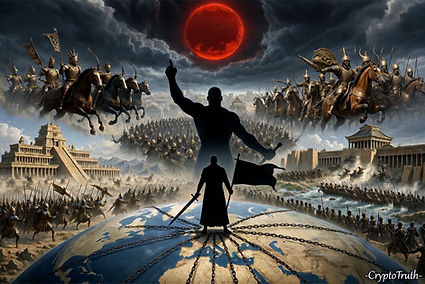
Strip away modern politics, media spin, and guilt narratives. What has every human group done when it held power? The answer is consistent: dominate, conquer, subjugate and expand. This isn’t about race or a colonial-era anomaly. It’s human nature across time and space, driven by survival, resources, territory, and the raw attraction to power. Look at the record:
-
The Mongol invasions under Genghis Khan: Armies swept across Asia and into Europe, killing tens of millions, reshaping entire civilizations through conquest and terror.
-
Thee Aztec empire in Mesoamerica: Ritual wars, human sacrifice, and brutal subjugation of neighboring city-states to feed their gods and empire.
-
The Bantu expansions across sub-Saharan Africa: Over centuries, migrations displaced and absorbed earlier indigenous populations like the Khoisan and Pygmy groups.
-
The Ottoman Turks: Centuries of dominance over the Middle East, North Africa, and the Balkans conquest, devshirme (forced child levy), taxation, and cultural imposition.
-
The Arab slave trade: Lasting over a millennium, it trafficked millions across Africa, the Middle East, and beyond far longer and in some estimates rivaling or exceeding the transatlantic trade in scale.
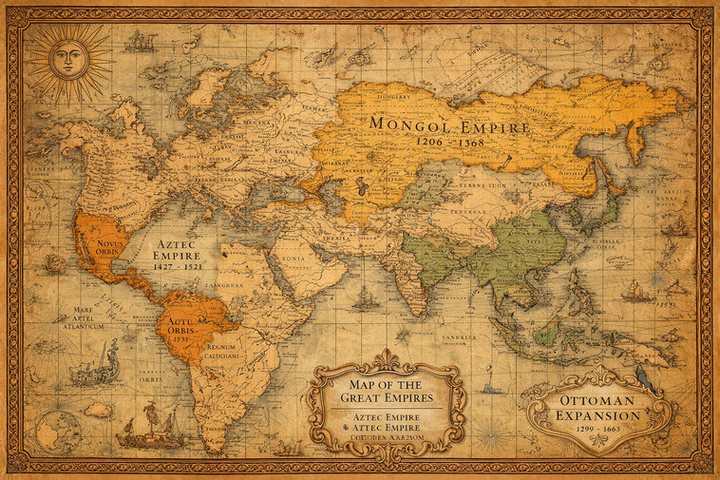
Even smaller-scale examples abound: pre-colonial tribal warfare in Africa, the Americas, and Polynesia routinely involved raids, enslavement, and land grabs. Exceptions? Almost nonexistent. When a group lacked the power due to isolation, technology, or numbers, they didn’t conquer. Not because they were morally superior, but because they couldn’t.
Why the Double Standard?
Why the Double Standard?
If this pattern is universal, then all people, and their ancestors, have blood on their hands. That much is undeniably clear. So why does modern discourse across legacy media, education, and politics so often frame the “white race” (Europeans and their descendants) as uniquely culpable? Why is their demographic decline, (the result of voluntary low birth rates in developed nations, so casually dismissed, when similar trends elsewhere would provoke concern, preservation, or urgency?

The answer isn’t simple, but part of it lies in regency bias and selective focus. European colonialism and the transatlantic slave trade were undeniably horrific, leaving scars that still shape the present. But they are not the only chapters in the long history of human conquest and subjugation, they are simply the ones most emphasized and perpetuated by modern communication technology. And that emphasis doesn’t exist in a vacuum. When the average person reads it, it's interpreted as fact. And, it aligns with a broader system, political, cultural, and institutional, that has strong incentives to maintain particular narratives, often at the expense of a more universal understanding of human nature. The damage that has done to the human psyche is incalculable when viewing the current world we live in.
That selective lens turns a neutral demographic projection, whites declining from roughly 16% to around 10% of the global population by 2100, into something quietly dismissed or even reframed as a form of
historical correction. It suggests, implicitly, that some outcomes are more acceptable than others depending on who they affect. But if the capacity for dominance, exploitation, and injustice is shared across all groups, then why the exceptional framing? Is it ignorance, narrative convenience, or something more structural? History suggests a simpler answer, human nature doesn’t change. Only the groups in power do. And who's in power now? Who's affecting the human psyche in contemporary time?
Agency: What Separates Us from Extinction

Here’s the crucial distinction: Unlike animals facing true extinction (pandas, rhinos, or isolated species), humans have agency. We choose family size, migration policies, cultural priorities, education, and values. Demographic shifts aren’t inevitable natural disasters; they’re outcomes of decisions.
Dismissing concern over any group’s declining share ignores that agency and the value of human biodiversity: diverse lineages, cultures, languages, and ways of seeing the world. Brian’s question risks inflaming a false narrative: that for whites alone, decline is unproblematic or justified retribution, not a neutral reality deserving the same thoughtful consideration we’d give any other people.
If this false narative isn't corrected the damage to our collective future is likely a price we will regret in a world where humans remain in a cycle of
hate, greed and social unrest. I'm for a safer, better world underpinned by less government and more self-sovereign people claiming responsibility for their own lives in communities aligned with treating others with respect, dignity and a common goal.
Toward Truth, Not Score-Settling
If we’re serious about truth, the narrative must center on our shared imperfections. Not racial grudges or selective guilt. Acknowledge the universality of human aggression, then use our agency to build something better: a future where no group dominates, displaces, or diminishes another against its will.One clear thought, one principled stand, can redirect history. That’s why I write this, not to divide, but to question dogma and push toward consistency. In the end, everything boils down to First Principles. Ignore them at your own risk. Every decision each individual makes over the course of their life determines it’s quality. Greed, power, control. Are all part of the canvas, how and what we apaint will either inspire or at best, ignored.
-CryptoTruth-
Seeking Clarity in a Chaotic World
Notes on Comments:
All comments are manually reviewed and approved before they appear. This keeps the conversation respectful, on-topic, and focused on first principles. I read every submission and reply where it adds to the discussion. Drop your thoughts below and let’s talk truth.